(My Screenplay Downward Dog)
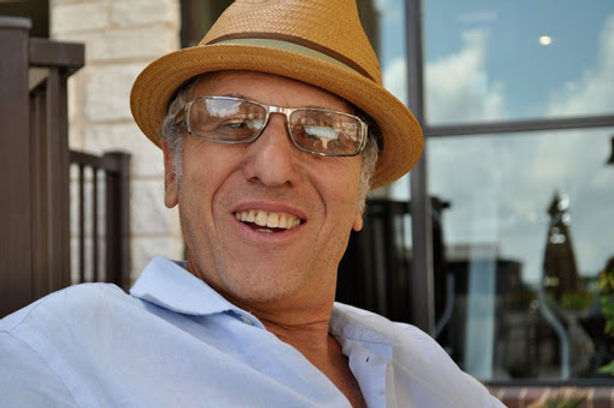
Before Covid, and before yoga live streams on Zoom, there was Larry Schultz, guru to the Grateful Dead, Chris Botti, and myriad yogis all over. And we need him now more than ever.
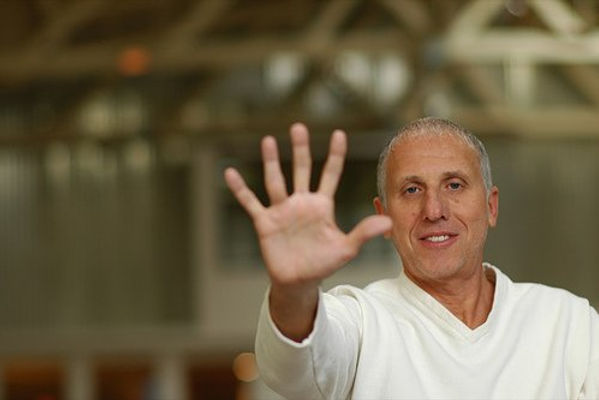
Larry Schultz
From Italy to San Francisco, Larry’s proteges would end up in a somewhat twisted version of Ashtanga yoga in his large wall-to-wall carpeted studio on Folsom Street. I can still hear him say, “Use the wall, but don’t let the wall use you!”
It was around 2007 and I wanted to write a screenplay loosely based on Larry, and another of his cohorts, Reed Taylor. Even my loft had that feeling of a movie set.
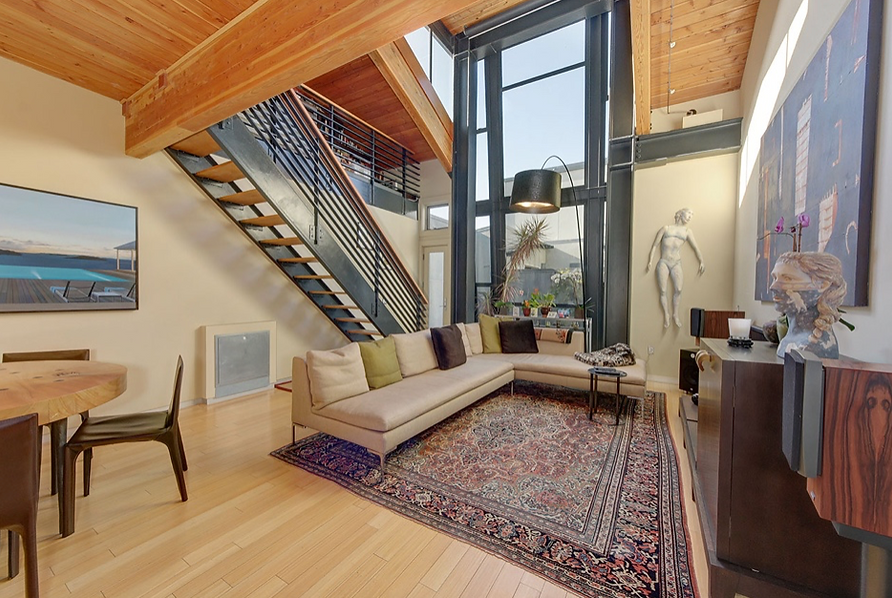
My apartment in San Francisco
WARNING: Knowledge of Warren Beatty and the movie Shampoo required.
Film Summary:
This is the story of a yoga teacher, named Reed, who lives in the mat room of a yoga studio in San Francisco. He’s a rock star of the San Francisco yoga community, the Mecca of the practice. He lives life easily: No money, job, or apartment – just lots of wanting women and a strong practice. He’s just like George (Warren Beatty) in Shampoo, which this story is based on.
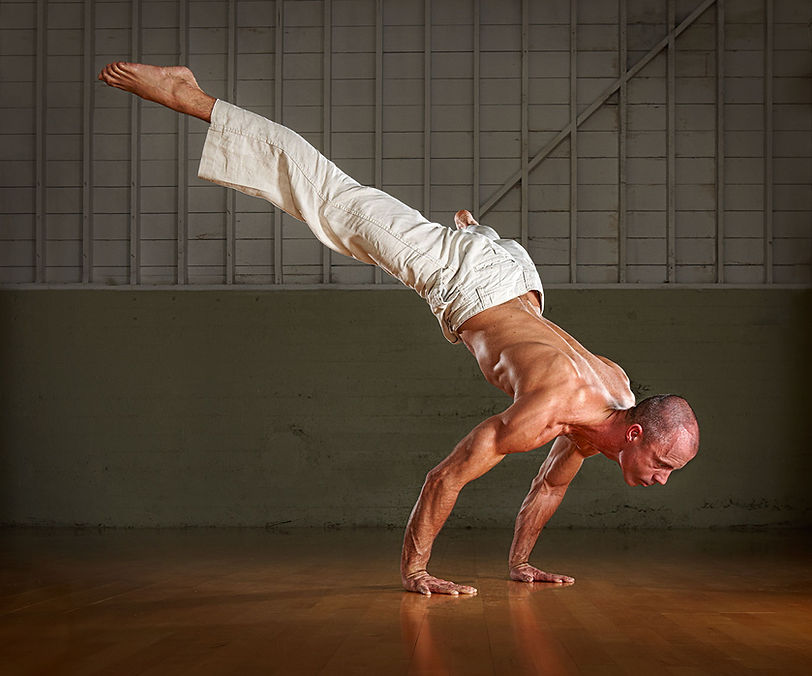
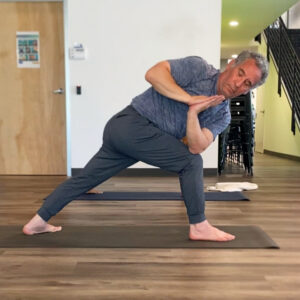
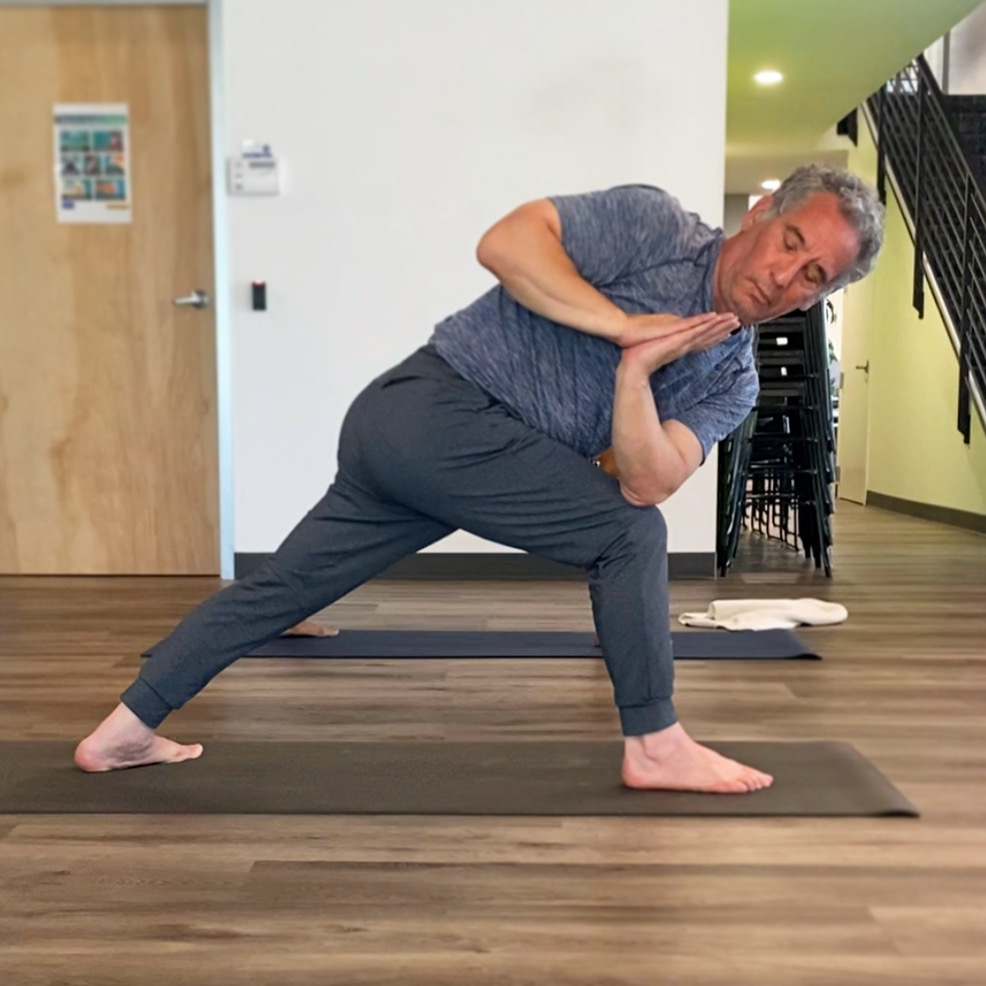
Reed Taylor
The film takes place on the day that Reed finds out the studio is going to be sold. The owner, a hippie named Larry, wants to retire, and move to Costa Rica. But as a saving grace, Larry offers the studio to Reed. But the catch is: He must come up with the money – something Reed has never had, nor needed. What’s worse is that a rich Indian businessman, named Ravan, is interested in acquiring Larry’s place, as well as several other studios in the Bay Area. Ravan has a plan and has gotten even the mayor, Gavin Newsome, involved. Yoga, it turns out, is turning into big business.
Reed goes on a quest to raise the capital. Friends, girlfriends, Sand Hill Road investors all turn him down. His last try is to participate in a yoga competition, win the grand prize, and be able to buy the studio from Larry.
Will he win? Is the competition rigged? Will Ravan and his henchmen lasso all the independent San Francisco yoga studios? Will Reed’s girlfriend/lawyer turn into a yoga teacher? Will Larry retire and move to Costa Rica?
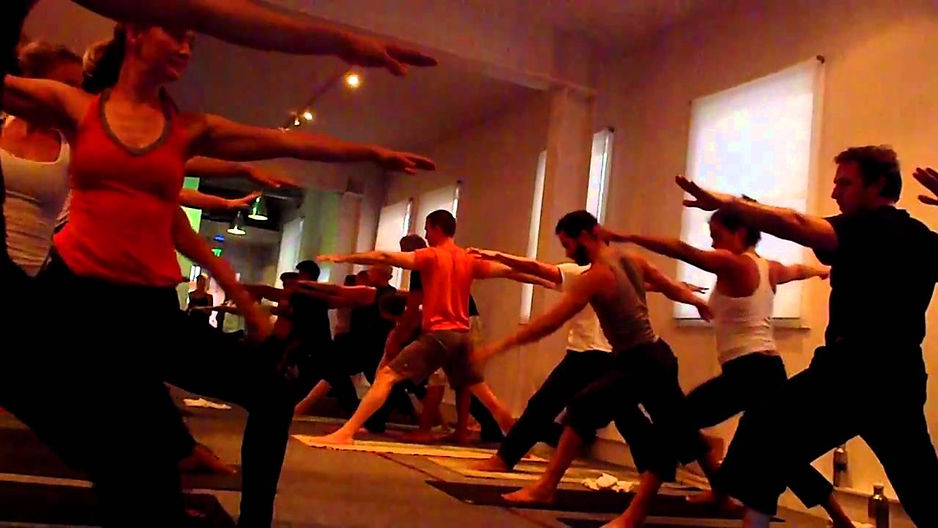
Larry’s It’s Yoga Studio on Folsom Street in San Francisco
Larry’s Yoga Studio:
The camera shows three rows of students, and Larry somewhat in the middle. The way the students position themselves is inconsistent, some facing each other, some not. Some of the students are men, most are not. Reed is assisting Larry and stays off to the side.
Larry is wearing a T-shirt on which is written, “Man is the New Woman.” Two imposing heaters hang from the high ceilings, blasting hot air.
Larry: “Raise your hands if you haven’t been here before.”
Some students meekly raise their hands.
Larry walks over to the stereo system, and plays “Rocket Man” by Elton John.
Larry: “Good,” pauses, “This will be a level 10 class,” laughs, and walks back to the middle of the room. “Class begins.”
Cut to Magnolia’s Studio:
In my screenplay, I wanted to contrast and compare a traditional Mysore-style Ashtanga to Larry’s class. I would have based this yoga teacher on Magnolia Zuniga:
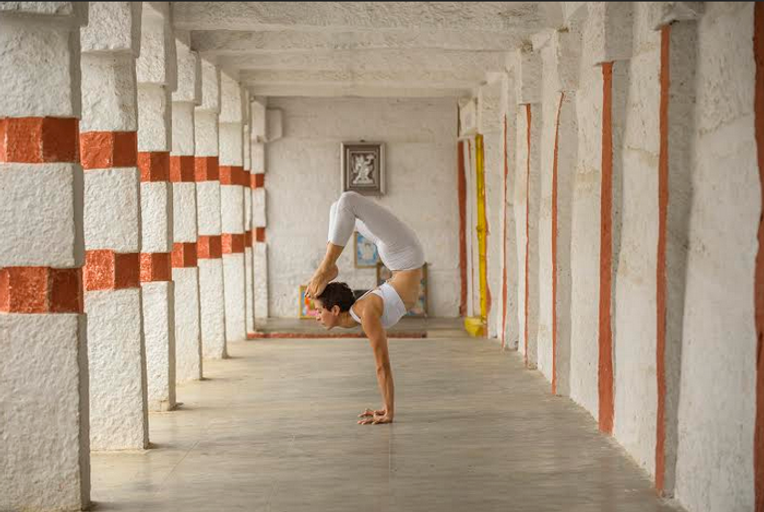
Magnolia Zuniga
Camera Back to Larry:
First comes the sun salutations, As, then the Bs, urged on by Larry, gesturing the breath, emphasizing the inhalation, and exhalation.
Larry: “Ask yourself what your intention is. Ask yourself what you are doing here. Ask not what yoga can do for you, but rather what you can do for yourself. Ask the teacher within.”
As the class starts with the Bs, he walks through the middle row, looking at Reed, like a disapproving father.
Larry: “Let yourselves go. Let yourselves go. There’s no pain. There’s no pain, ‘cause it’s all in your head. Relax. Relax. Tell yourself to relax, ‘cause you’re here. Not there. Not out there.”
Larry points to the front door, the outside, like George Washington crossing the Hudson, slightly wondering why he wasn’t as rich as the likes of Larry Ellison or Bill Gates, names that seemed like omniscient signposts in the Bay Area.
Larry: “Hell,” a bit confused by his sudden statement, “I taught the Grateful Dead yoga!”
The sound of a muted cell phone from a cubby inside the studio interrupts his flow. Some of the students continue, others stop, look up, and shake their heads in disapproval.
Larry: “You don’t need a cell phone,” urging the class with his arms extended, gesturing the positions. “That sound doesn’t exist. You don’t need a car either…you don’t! In fact, I lost my car five years ago. I lost everything five years ago, but I’m here, after 66,000 sun salutes, 9,000 yoga classes, and 30 pounds of…”
At which point he stops himself from saying “pot,” and instead, points to Maria, his live-in girlfriend, thirty years his junior, and a teacher at the studio.
Larry: “I’ve got everything I need…love and yoga.”

Maria
Camera points to Maria, Larry’s girlfriend.
Another cell phone breaks the silence.
Reed gracefully lifts his hips into the air from a downward dog into a handstand, remaining there, in flight, so to speak, lifting one arm, into a single-handed handstand, then, ever so slowly pivoting his legs from his hips, into a front stretch.
Reed: [inner dialogue] “We’ll find out who smokes who!” [thinking about some of the A-types over at Rusty’s studio in the Mission.]. He then goes back to a handstand and gracefully transitions to a straddle mula bandha check-up — legs spread out wide, holding his body off the ground, palms flat on the mat.
Larry: “Nice Reed,” boasting, then stopping everyone from whatever they were doing, and says, pointing to Reed, “Look at him fly…now that’s eight years of coming to class five days a week…that’s yoga.”
Larry makes a swooshing sound, like an airplane taking off. It is a sound of his admiration of both Reed and himself – of what he taught Reed, and how it made his studio different from all the others, even Rusty’s.
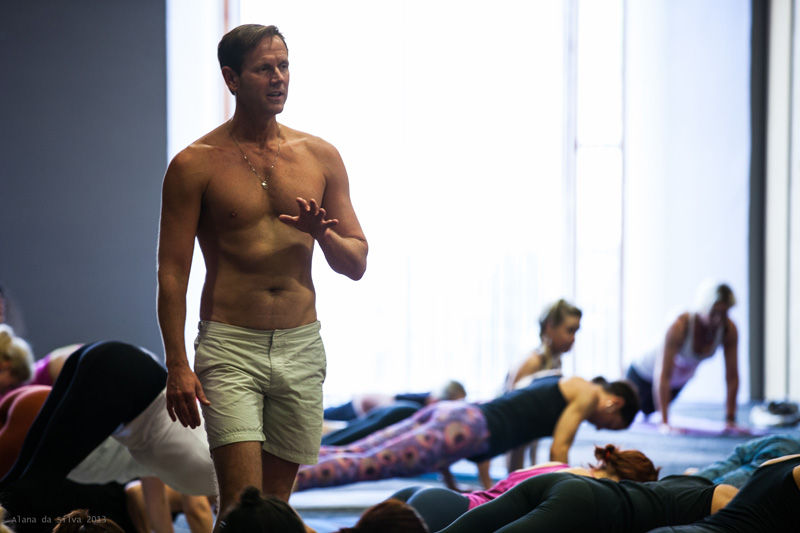
Rusty Wells
Here, at Larry’s, standing on your hands is like a form of release and freedom, but originating from talent and discipline. Larry loves when Reed performs – loves it and is flying up there with him.
But as proud and excited as he is, Larry quickly qualifies his endorsement.
Larry: “You don’t have to do a handstand to do yoga, you just have to breathe.”
It is indeed confusing: one minute Larry exhibits Reed, like the apotheosis of yoga, and in another, he contradicts himself and says none of that matters. All the while, the class watches the acrobatics, some ogling, some disapproving,
After a considerable number of ab-crunching exercises, the rest of the class engages or tries to engage in handstands. Larry urges his students to use the room length “inversion” wall that he believes was divinely constructed, like the Wailing Wall in Jerusalem, just for yoga. There, against it, legs fly up in an arc, and come crashing down against the cement, appearing more like support structures for the building than anything like freestanding beings aspiring for inner peace.
Then there those who try to handstand without the support of the wall. Some get one leg up in the air, others two, but then fall. From the lobby windows, where students for the following class hang out, it looks like some kind of kids’ program run amok. Bent legs, bodies falling, some crashing, or cursing (at least silently), some laughing at themselves, others giving up, breathing alone, in a child’s pose, and still, others falling repeatedly, only to try again.
Larry: “Use the wall,” he says encouragingly, “But don’t let the wall use you!”
But for those in the middle row – it does not matter. They fly. And the arc of their legs is slow and precise, unyielding abs convincingly thwarting both gravity and momentum. It is no kids’ program run amok. It is a picture of measure and balance, against the background music.
A Collage of Yogi Portraits: The A-Team, Middle Row:
A handstand, however, is not the only admissions requirement for the high rollers, the “A-team,” which consists of Reed, Jenn, Amy, Sarah, Todd, Maria, Kelly, Gretchen, and sometimes David Kyle and Richard.
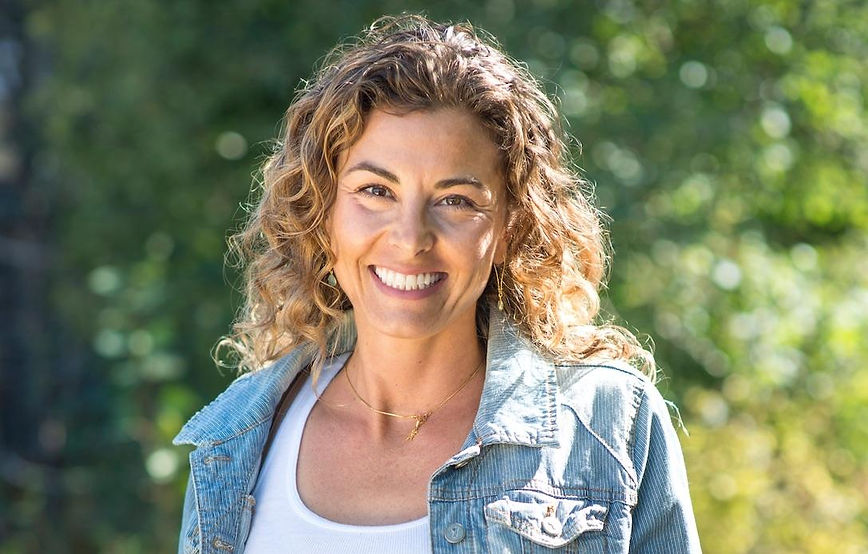
Jenn
It is a combination of strength, knowledge, flexibility, mental acuity looks, body fat (the lack of), dedication, even unemployment, that are the key factors to this first tier of practitioners. A collage of photographs and bios emphasize these points, like “Chorus Line.
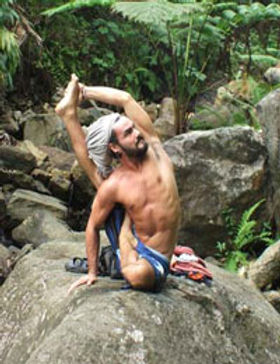
David Kyle
Larry then Reed:
Larry: “Did we do the left side?” lost in the sequence, realizing he may be stoned.
Female yoga student: “Yes, we did.” A sparkle of pride, like blush, surfaces on her cheeks.
Larry: “See that…she came to my rescue,” he salutes, “not like this one,” pointing to Reed.
Reed: “I wasn’t the one lost, Larry.”
Larry: “That’s funny.”
At which point, Reed excuses himself. The camera follows him as he walks out of the yoga room, to the bathroom, and makes an obscene hand gesture, and then coifs his hair
Camera Turns Back to the Studio:
Larry called his series of yoga The Rocket. Its sequence of poses modeled the primary series. None of the poses are particularly difficult, but in the end, you feel exhausted, physically and mentally.
The primary series is the first set of yoga positions that you learn in Ashtanga, and, as some yogis have theorized, is about reducing – if not expunging – the natural sexual urges of young Hindis. Bending over, and over again, restricting the blood from the pelvic area, taking the urge away, away from the tension of the moment, onto higher, more ego-less aspirations. And at the end of the primary series, like life, is the corpse pose, resigned, exhausted, contemplative, and un-reactive.
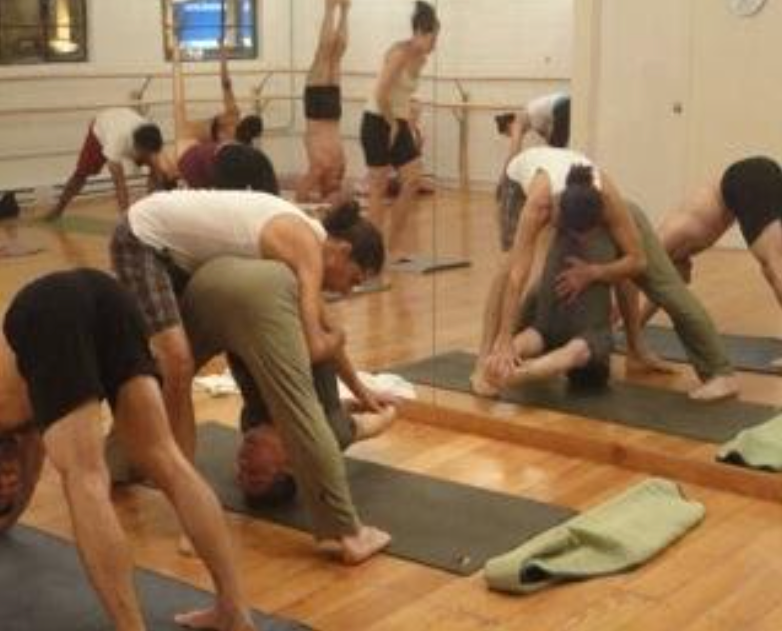
Me doing Mysore (in green yoga pants)
Larry: “I’d like to make an announcement,” after namaste, now the end of class.
It is quiet. Music off. The orange glow of the sunset seeps through the cracked edges of broken skylights. The huge heaters, once like symbols of power, are voiceless, challenging no one. Some students are still lying on their backs, others in full lotus. A chorus of students congregates around the lobby door, restless, and ready to go to the next class, but respectful that Larry is speaking.
Larry: “And you’re the first to know,” looks around at his captive audience, “the first here, and the first in the city.”
Those on their backs either turned to look up or got themselves up. The class is unaccustomed to formal announcements.
Larry: “I know some of you will find this hard to believe…I know this…but over time… you will all understand.” At which point he looks to his left, right, and then directly to Maria, who thinks, at that moment, Larry is going to propose to her.
Larry: “There will be three judges – one of them – yours truly – to determine the best female and male yogis in San Francisco.” More silence. “We’re calling the competition, Mula Bandha. Get it! It’s the Reed Show. Swoosh.”
And like an airplane or rocket, Larry lifts his arms up and flies off.
Larry died on February 27, 2011.